

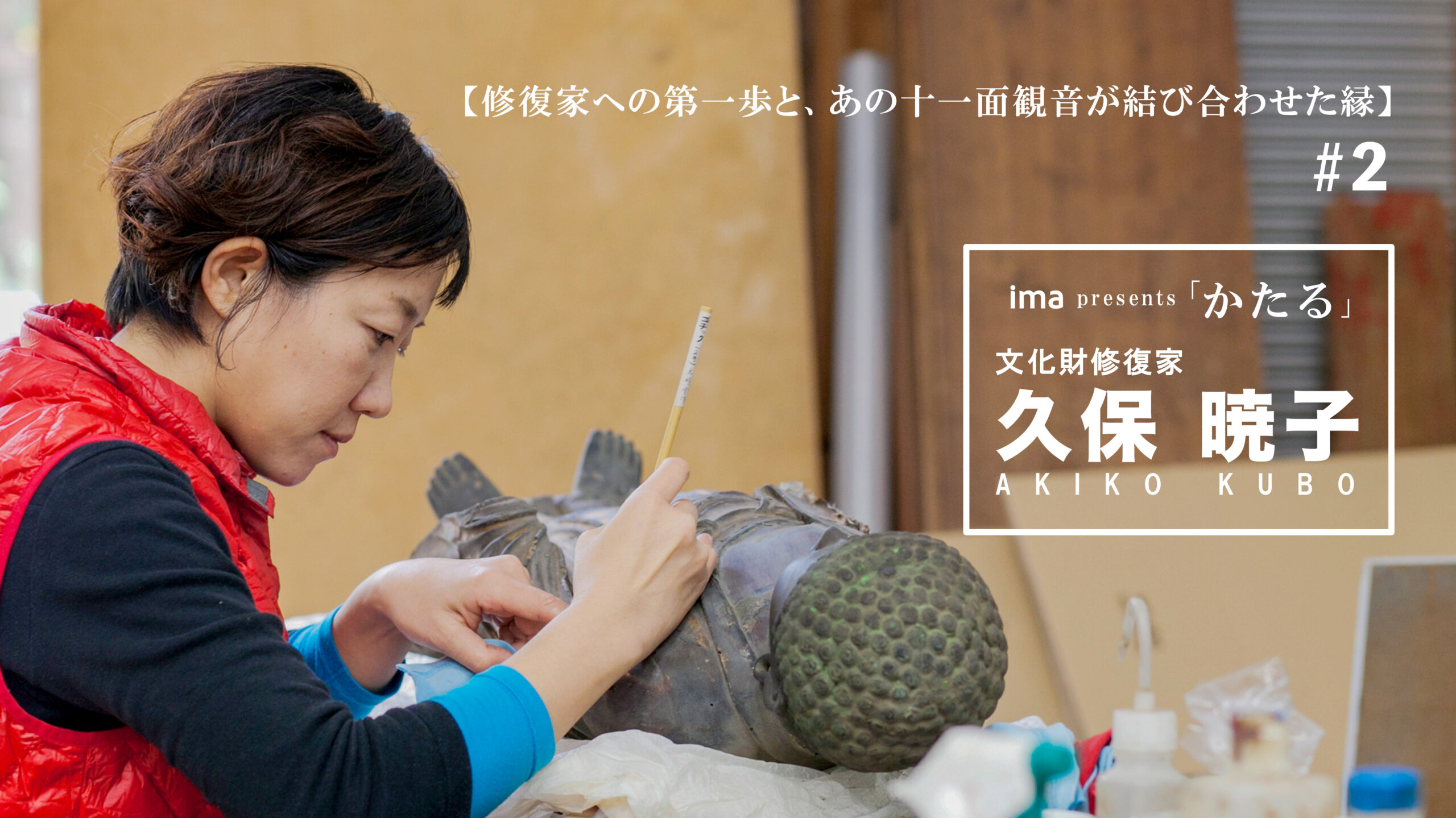
Leaving my company and moving to Yamagata—that was the moment I took my first step as a restorer.
Everything was a new world for me—handling the tools, the smell of lacquer, everything. In those days of trial and error, I began a period of wholeheartedly dedicating myself to the work of “Buddhist statue restoration.”
The year I spent at Tohoku University of Art and Design’s Tohoku Institute for Classical Sculpture Restoration was not only about learning techniques, but also a time that awakened something dormant within me. This is the second installment of Akiko Kubo’s story, the origin of that journey that would later lead to many encounters.
The world of Buddhist statues I encountered in Yamagata
After completing a one-month handover period, I resigned from my company and moved to Yamagata to join the Tohoku University of Art and Design’s Tohoku Institute for the Restoration of Classical Sculpture.
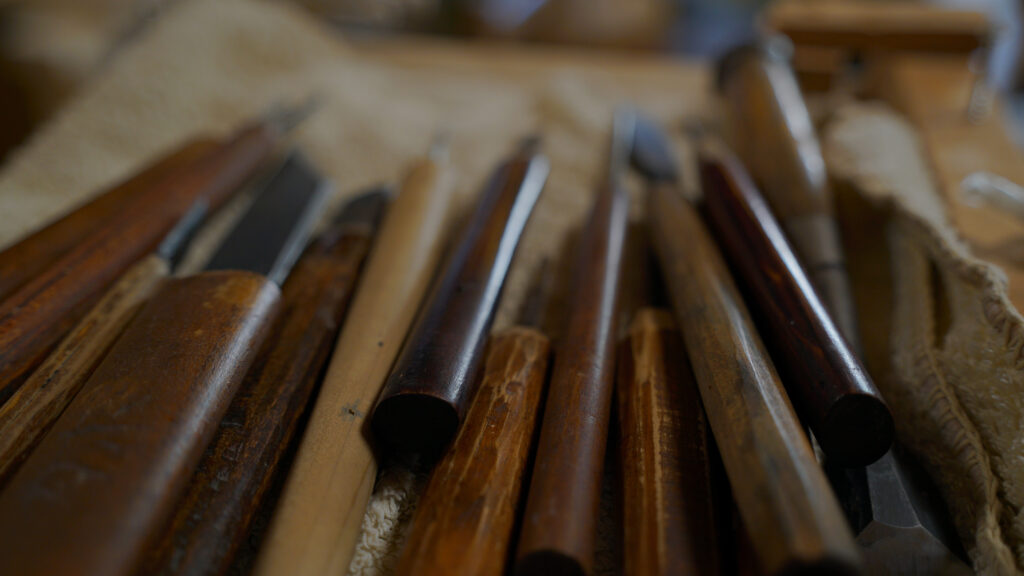
I started with absolutely no knowledge. I took the same introductory classes as the first-year university students, learning everything from drawing to sharpening blades, preparing lacquer brushes, making lacquer work plates, and preparing planes—truly learning the very basics from scratch. During that time, I also participated in seminar trips with professors to visit Buddhist art sites in Nara and Kyoto, and took part in a tour of Buddhist statues in Korea. Although I was only a research student for one year, I feel I had a truly fulfilling experience.
To be honest, before going to Yamagata, I wasn’t that enthusiastic about it. I had a casual attitude, thinking, “I’ll just try it for a year, and if it doesn’t work out, I can always go back to being a company employee.” But when I actually started working on restoring Buddhist statues while feeling the history and background, I found it really interesting, and before I knew it, I was completely hooked. I think one of the reasons I got so hooked was because it connected with my previous experiences.
Having traveled through Asia, living in Osaka which is close to Nara and Kyoto, and visiting temples and viewing Buddhist statues, these things never felt unfamiliar to me. While traveling, I had opportunities to see Buddhist statue restoration work in Asia, and it felt like the world of restoration was a natural extension of that.
Following that, after finishing my research in Yamagata, I went to help out at a professor’s workshop in Omiya, almost without pay. However, that “Omiya period” came to an end after about six months.
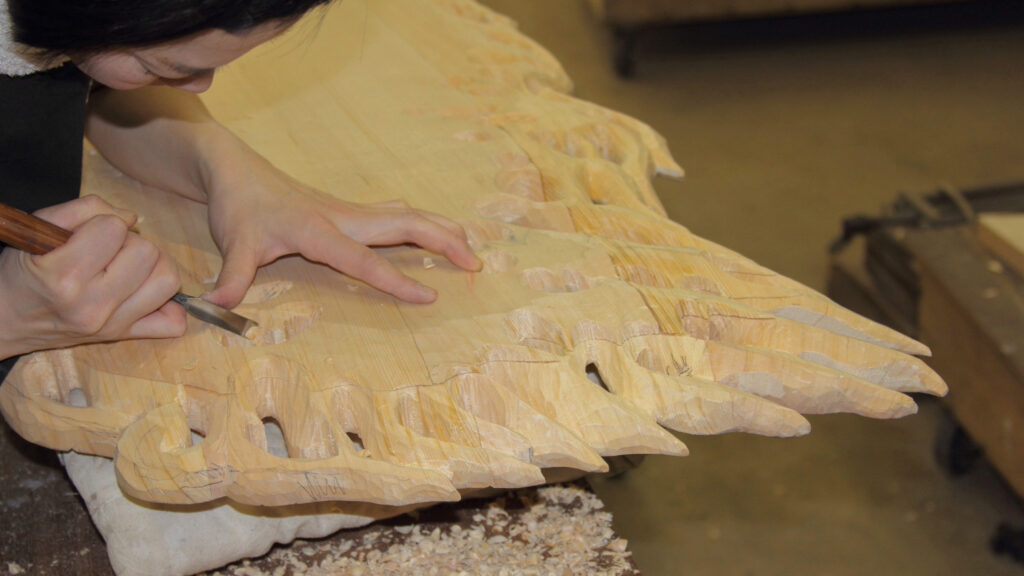
The eleven-faced Kannon of Watagishi Temple forged a bond
Let’s go back in time a little, to my time in Yamagata.
During a seminar trip, we visited Watagishi Temple in Shiga Prefecture, and I was admiring the statue in front of the “Eleven-Faced Kannon.” At that moment, one of the students with me happened to reunite with a female graduate (Ms. Honma), who was an apprentice studying restoration under the master craftsman in Chonan-machi, Chiba, with whom I would later become deeply involved.
I had just decided to return to Tokyo, so I simply said something like, “I’m going back to Tokyo, so please let me know if anything comes up,” and that was the end of it.
Several months later, when Ms. Honma was leaving the master’s apprenticeship, she suddenly contacted me. She asked, “Would you like to come and help?”
The plan was for me to take over when Honma-san left. However, due to family circumstances, I initially declined. But a little later, Kawamoto-san contacted me, saying, “You said you weren’t coming, but there’s a research project I need to do. If you have time, why don’t you come in for just that day?” That’s how I ended up working for Kawamoto-san.
That was in the spring when I was 29 years old.The research at that time wasn’t on Buddhist statues, but on “masks used in Buddhist ceremonies.”And it was at that site that I first met Hamana Jun’ichi, who would later become deeply involved in my path in restoration.
15 years walking alongside Master Kawamoto, the spirit I inherited
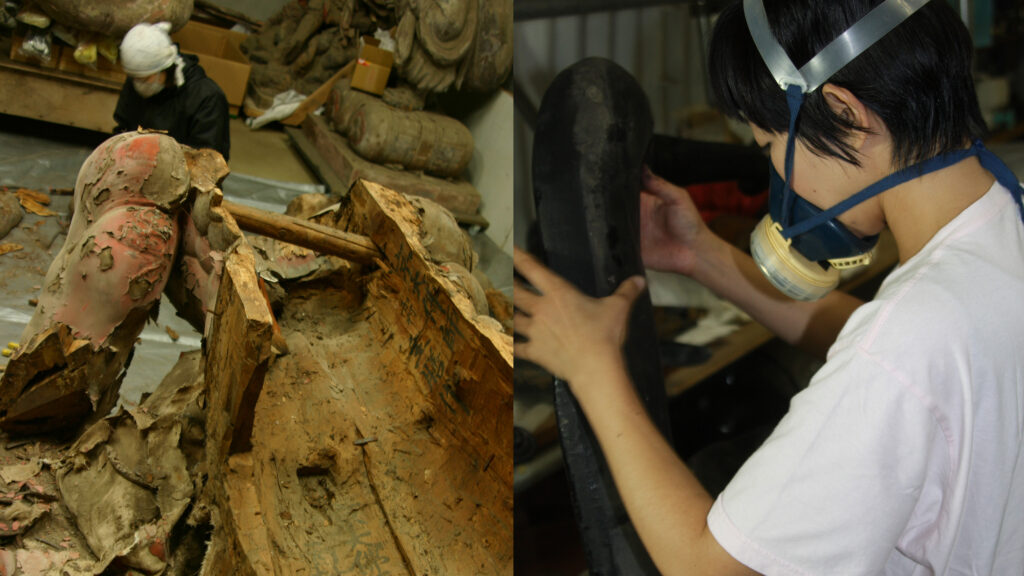
I worked under Mr. Kawamoto for about 15 years. My memory is a little hazy in some parts, but some of the works he created include the “Standing Yakushi Nyorai Statue at Tōmyōji Temple” and the “Seated Amida Nyorai Statue at Dōmyōji Temple” in Futtsu City, the “Seated Shakyamuni Buddha Statue at Ganzōji Temple” in Nagara Town, the “Standing Shakyamuni Buddha Statue at Eikōji Temple” in Mobara City, the “Standing Daikokuten Statue at Mano-ji Temple” and the “Standing Yakushi Nyorai Statue (Omae-dachi)” at Komatsu-ji Temple in Minamibōsō City, the “Seated Amida Nyorai Statue at Chōfukuju-ji Temple” in Chōnan Town, the “Nio Statues at Tokugan-ji Temple” in Ichikawa City, the “Nio Statues at Gyōtoku-ji Temple” in Mobara City, and the “Seated Shakyamuni Buddha Statue at Shōkaku-ji Temple” in Sanmu City.
I believe that we restored over 20 Buddhist statues designated as cultural properties in this area alone, and over 200 in total. In addition to restoration, I was also involved in research, exhibition support, lectures, workshops, and assisting with tours back then. What I was doing hasn’t changed much from what I do now. Also, when Mr. Kawamoto was involved in community development activities, I had the opportunity to help out in Mishima Town, Fukushima Prefecture.
I really enjoyed working with my master. Those 15 years flew by. People often told me it must have been tough, but strangely, I didn’t feel that way. On the contrary, I’m still grateful that Mr. Kawamoto continued to employ me for such a long time. He has a strong sense of his own style, but he’s always down-to-earth and a really good person.
A new story unfolds beyond the decision.
Having worked in harsh environments for many years, I gradually began to notice changes in my body. I decided that I needed a break and resolved to leave Mr. Kawamoto’s company.
At the time, I thought that leaving Mr. Kawamoto’s place would mean the end of my career as a restorer. I had no experience working independently, and I couldn’t handle sales, so I thought quitting meant leaving this world entirely.
A lot happened between leaving Mr. Kawamoto’s company in 2015 and becoming independent in 2017.
Even after I left, Mr. Kawamoto would sometimes entrust me with work as a freelancer. Initially, I worked at his workshop about one day a week, but it gradually increased until eventually I was working with him five days a week (laughs).
On the other hand, immediately after quitting my previous job, I was also looking for work to receive unemployment benefits, and during that time I helped out as a freelancer doing digital image processing for a company called Horiuchi Color. The person who taught me image processing there is still working on my website and logo design today, so those connections from back then are still relevant today.
Then, around the end of 2016, Jun’ichi Hamana (of the Tendai sect’s Hoju-ji Temple) approached me and said, “Kubo-chan, I have a research project, and you might be worried about doing it alone. But would you like to do it together?” That became a major turning point for me.
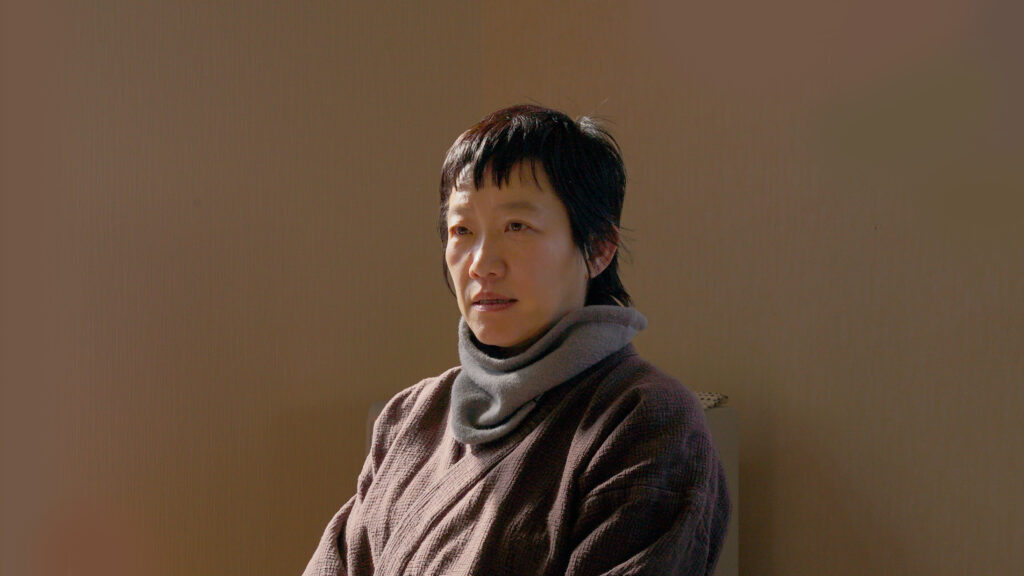

A word from the author
When stepping into the unknown, one can only proceed by trial and error. However, that very anxiety and hesitation eventually transform into a firm sense of certainty. I felt that my experiences in Yamagata and under Mr. Kawamoto were the foundation for my decision to “stand on my own.”
And the connections I’ve made so far are leading me to a new environment.
Thank you for watching Episode 2, “The Connection Forged by That Eleven-Faced Kannon Moved My Life as a Restorer #2.” Please look forward to the next episode, Episode 3, “My Feelings About ‘Restoration’ Discovered Through Facing Buddhist Statues #3.”