

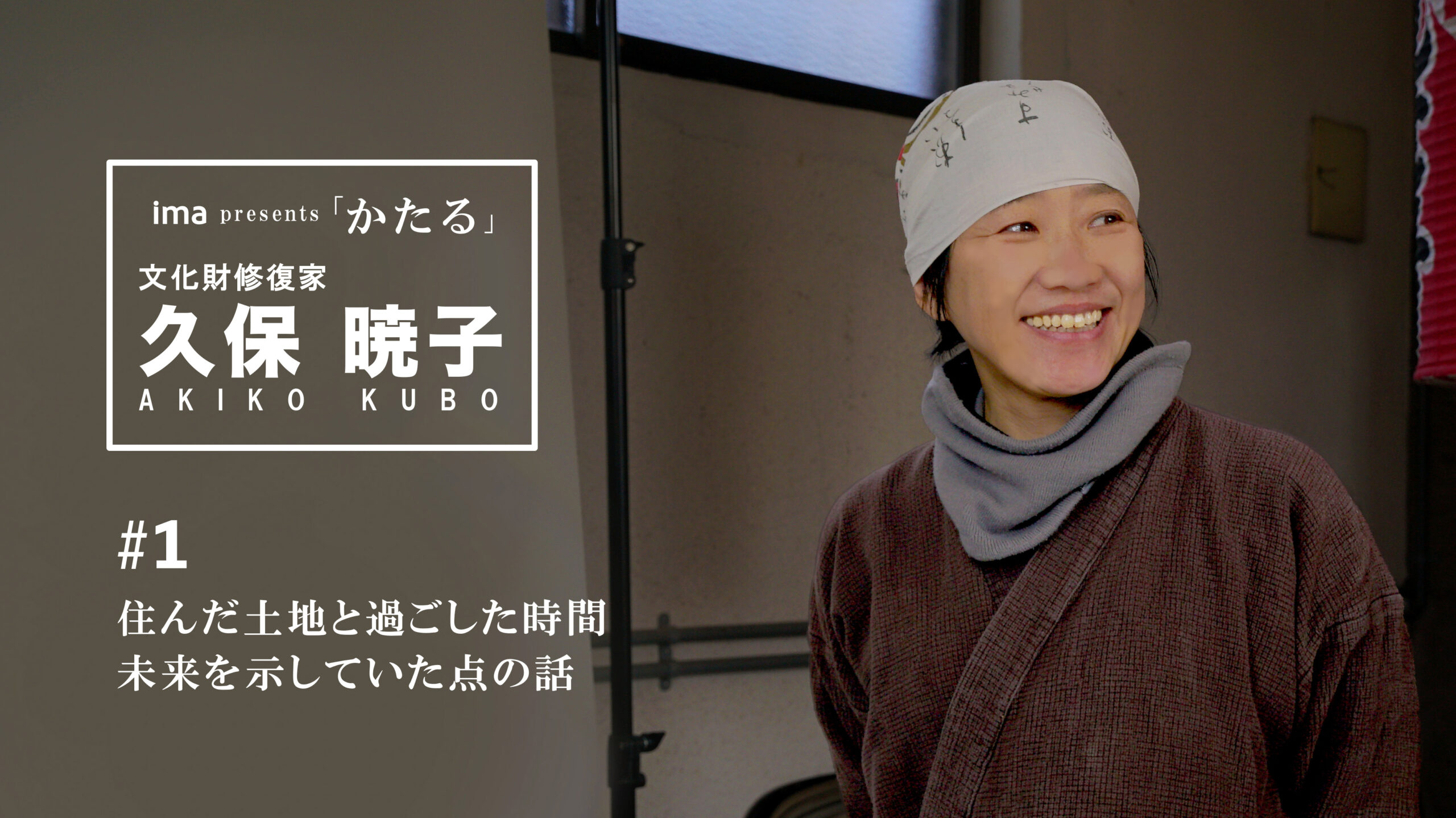
“I feel like that ruins construction site was the beginning of my life,” says cultural property restorer Kubo Akiko.
Born in Machida, Tokyo, she spent her childhood living in Minamiibaraki, Osaka, where she chanced upon an ancient ruin, which sparked her interest in history. After traveling and exploring the world as a student, driven by her curiosity, it was an encounter with a book that led her into the world of cultural property restoration. What was the determination behind this shift from commerce to tradition?
Starting with this issue, ima presents “Kataru” will feature cultural property restorer Kubo Akiko in several installments.
In this first episode of Kubo Akiko’s “Kataru,” we will now unravel her journey.
This village of bronze bells is the origin that opened the eyes of history.
I was born in Machida, Tokyo, and grew up in a so-called mammoth housing complex. My family transferred frequently, so I moved around a lot, living in Osaka, Chiba, Shizuoka, and other places.
When I was in the lower grades of elementary school, we lived in Minamiibaraki, Osaka. The number of students at my elementary school at the time increased, and they decided to open a branch school. Just as the new school building was being built, the Higashi Nara Ruins were discovered… Construction of the school was temporarily halted.
I later learned that the area was apparently the remains of a workshop village where bronze bells were made. Perhaps because it was in the midst of Japan’s period of rapid economic growth, the excavation was completed in about a year, and I was able to safely attend my new school.
Later, a local history museum opened near my school, and I remember being excited to discover something so old was so close to me. I think this was my first real experience of “history.”
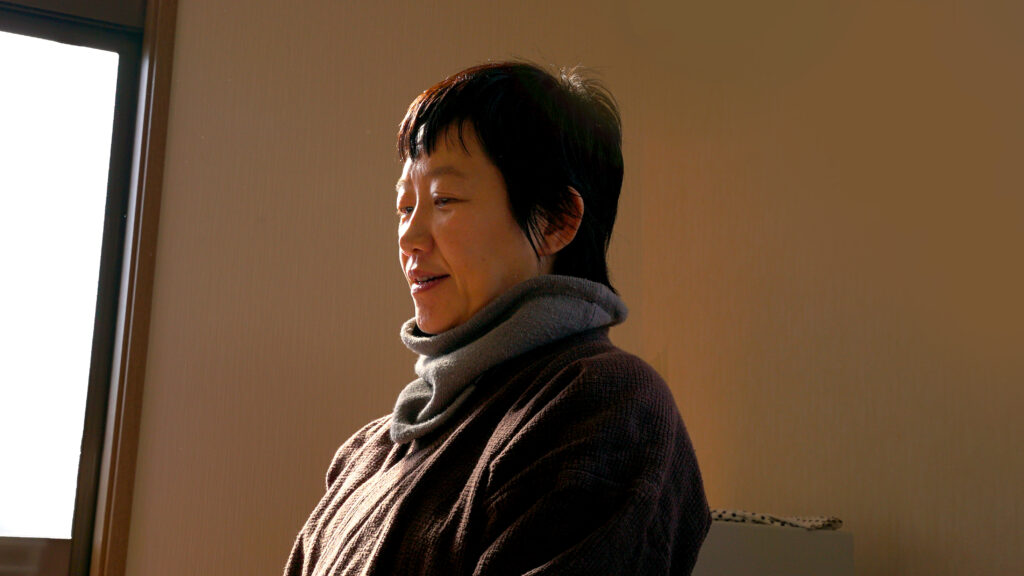
Travel, eat, and laugh as you please. College is a time to “do as much as you like.”
In September of my third year of high school, during a three-way conference, my mother suddenly told me, “I’ve decided to go to a women’s university,” which led to a sudden change in my career path. Since I was a fan of Kuniko Mukoda, I decided to make the most of my time at a women’s university. I thought I could commute to Shibuya, but in fact I always commuted to the Hachioji campus…
My university days were truly free. I read as many books as I wanted, worked part-time jobs, traveled, and even went skiing. The school cafeteria had an Indian restaurant, so I ate nothing but keema curry and mutton curry for four years (laughs).
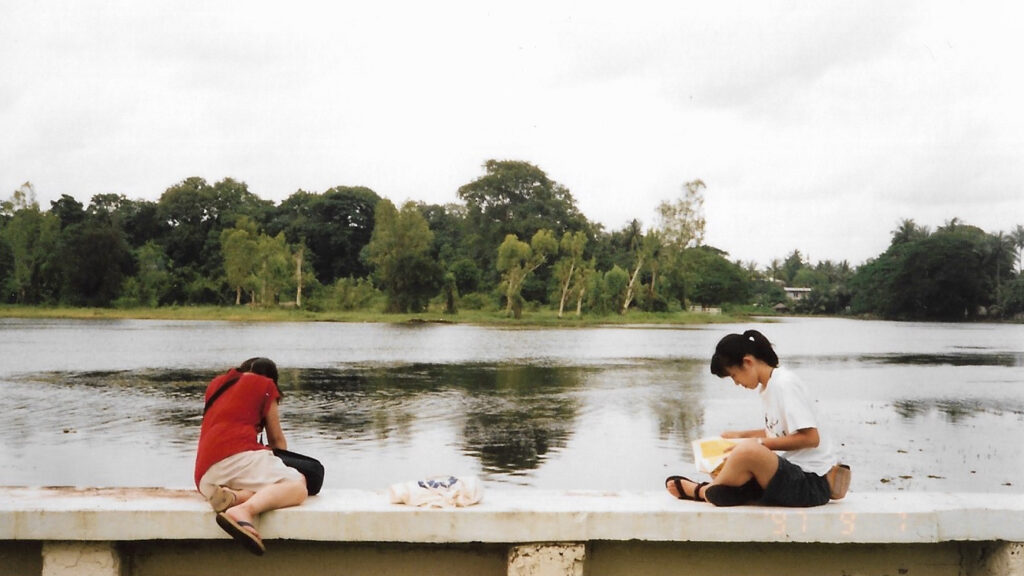
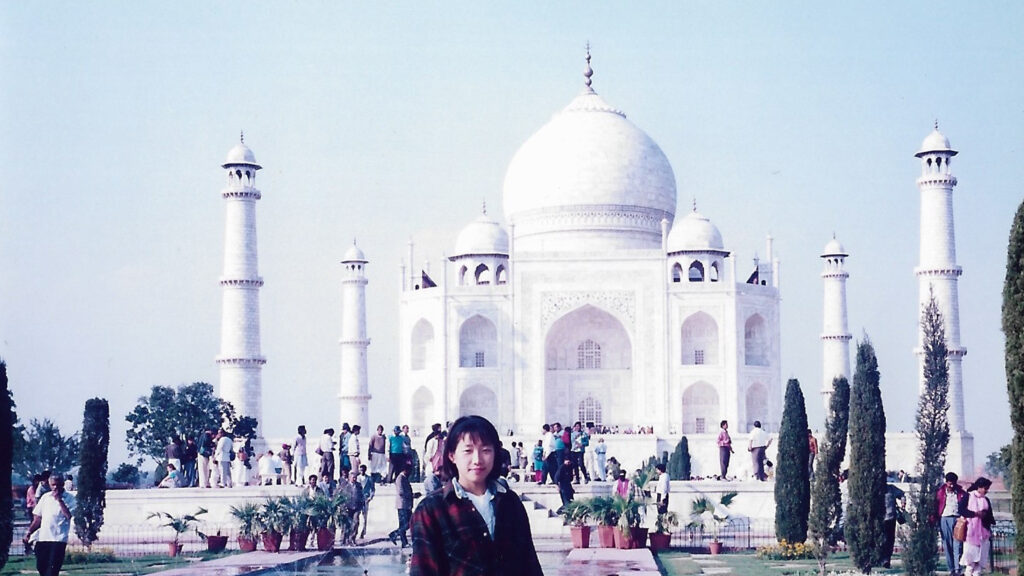
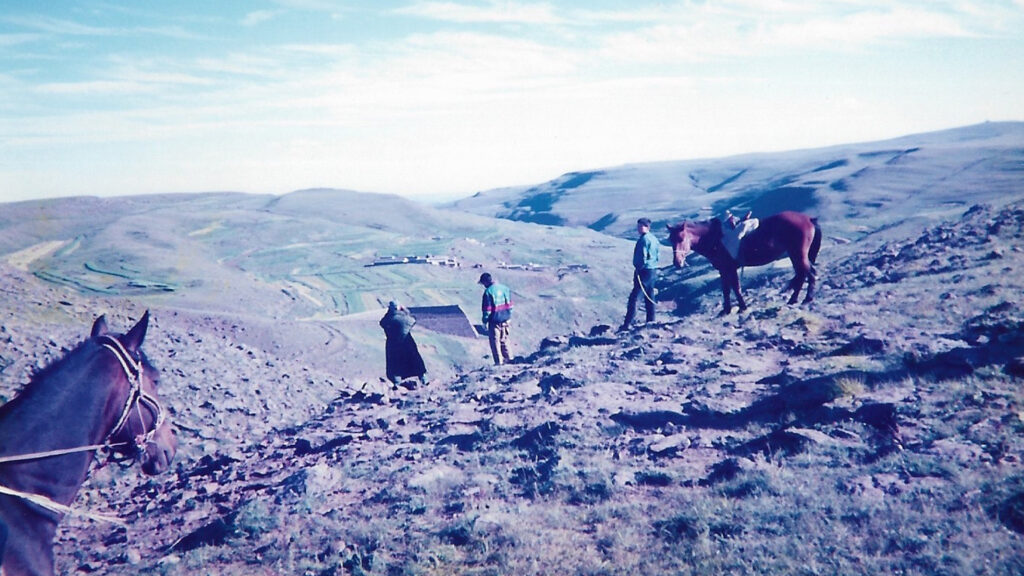
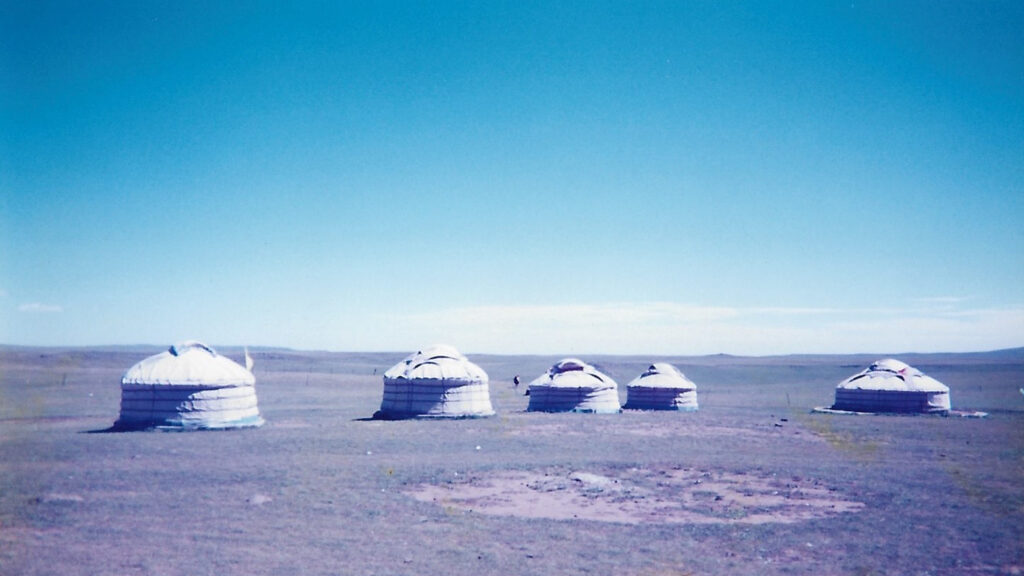
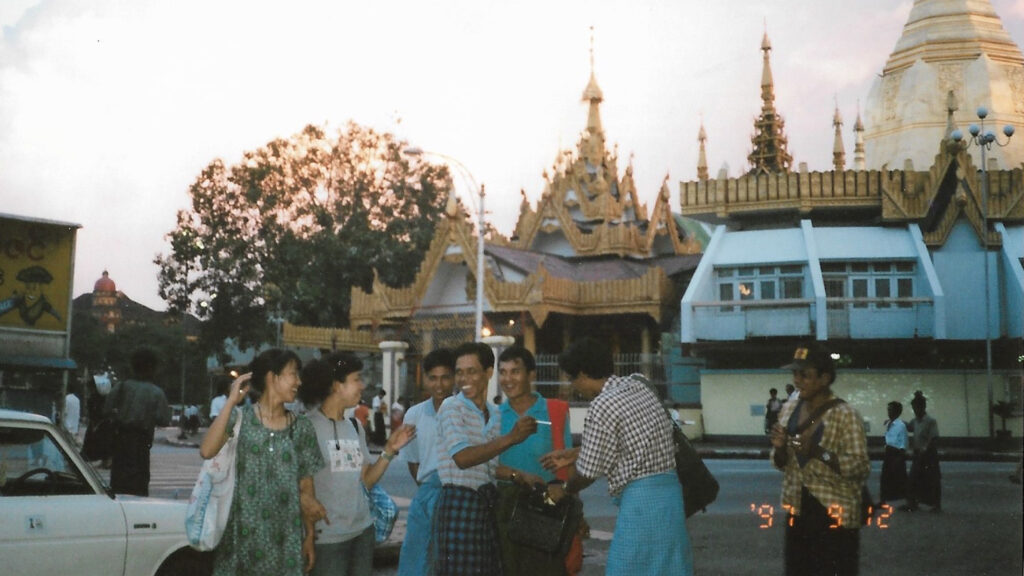
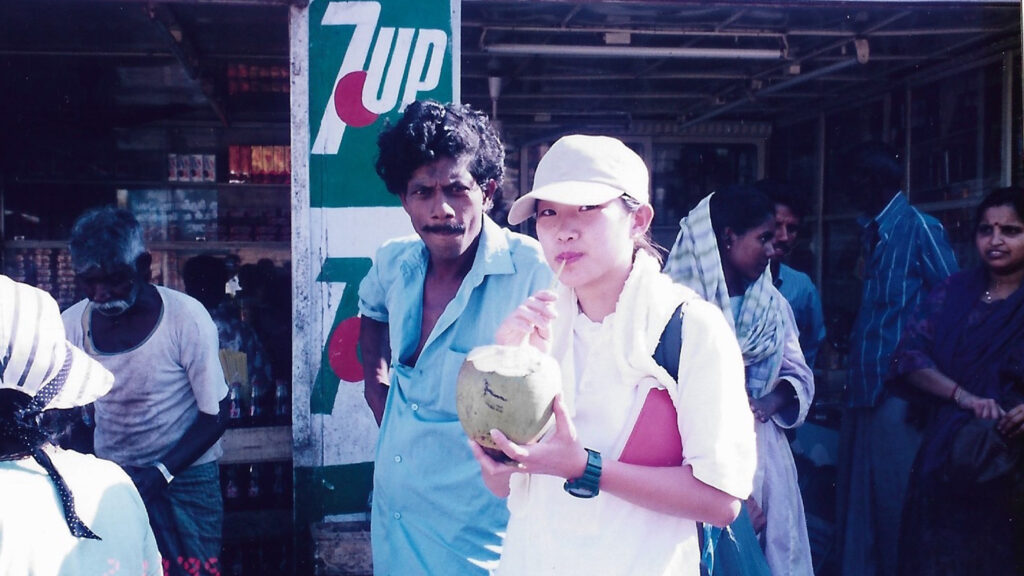
I also traveled quite a bit. My basic style was to just buy the first flight ticket and set off, and I was “invincible.” My first trip was a hitchhiking trip around Hokkaido. After that, I backpacked around India, China, Myanmar, Tibet, Nepal, Vietnam, Taiwan, Canada, Korea, Guam, and other places, exploring the food I wanted and the places that interested me. As I spent my time like this, it felt like four years had passed before I even realized it.

The book I picked up, “Let’s Make a Mannequin,” led me into the world of Buddhist statue restoration.
After graduating from university, I got a job at a major mail-order company, where I was in charge of apparel.
When I was first entrusted with my own page, there was a mannequin I really wanted to use. I consulted with my stylist and boss, but they said, “It would cost about 1 million yen, so it’s impossible” (laughs). So I thought, why not just make one myself, and started reading books on sculpture. In the end, I wasn’t able to make the mannequin, though.
That’s when I picked up a book about Japanese Buddhist statue carving. It was “An Easy Way to Look at Buddhist Statues” by Nishimura Kimiaki from the Tombo Books series. Nishimura is someone who communicates the fascinating aspects of Buddhist statues to the general public, and he’s also a restorer. The book talked about restoration, and it made me think, “Buddha statue restoration sounds interesting.” I think I was around 25 or 26 years old at the time.
However, I didn’t really think, “I want to be a restorer” at the time. I just had a vague dream that restoring Buddhist statues sounds interesting, or that being a guide to cultural assets like Buddhist statues would be fun.
Around that time, the internet was just starting to take hold throughout society, and I was in the New Media Sales Department. Back then, it wasn’t the era when everyone had their own computer, but thanks to my department, I had my own computer and was able to browse the internet freely.
There, I happened across a message board called “Restorers’ Gathering,” which was similar to today’s social media. Thinking, “Wow, there’s a world like this, it sounds interesting,” I posted, “I’m interested,” and received a reply, “I have a studio in Omiya. If you’re interested, please come and see.”
I decided to inquire about work, and it turned out that he was a professor at the Tohoku Institute of Classical Sculpture Restoration at Tohoku University of Art and Design. He invited me, saying, “There’s just one spot open, and if you’re working, I think you can get in right away.”
I thought, “That sounds interesting, I’d like to go,” and spent the day thinking about it, before telling my company the next day that I was quitting. Looking back, it was quite a decision .
Afterword
Perhaps it all began with a chance encounter.
The smell of earth at a construction site seen as a child, an encounter with the “invisible time” of ruins. The journey that followed from there would later lead to a career.
I believe the threads of destiny continue to weave beneath our feet, without us even realizing it.
And before long, those threads will lead us to a time weaving together skill and heart in a new land called Yamagata.