

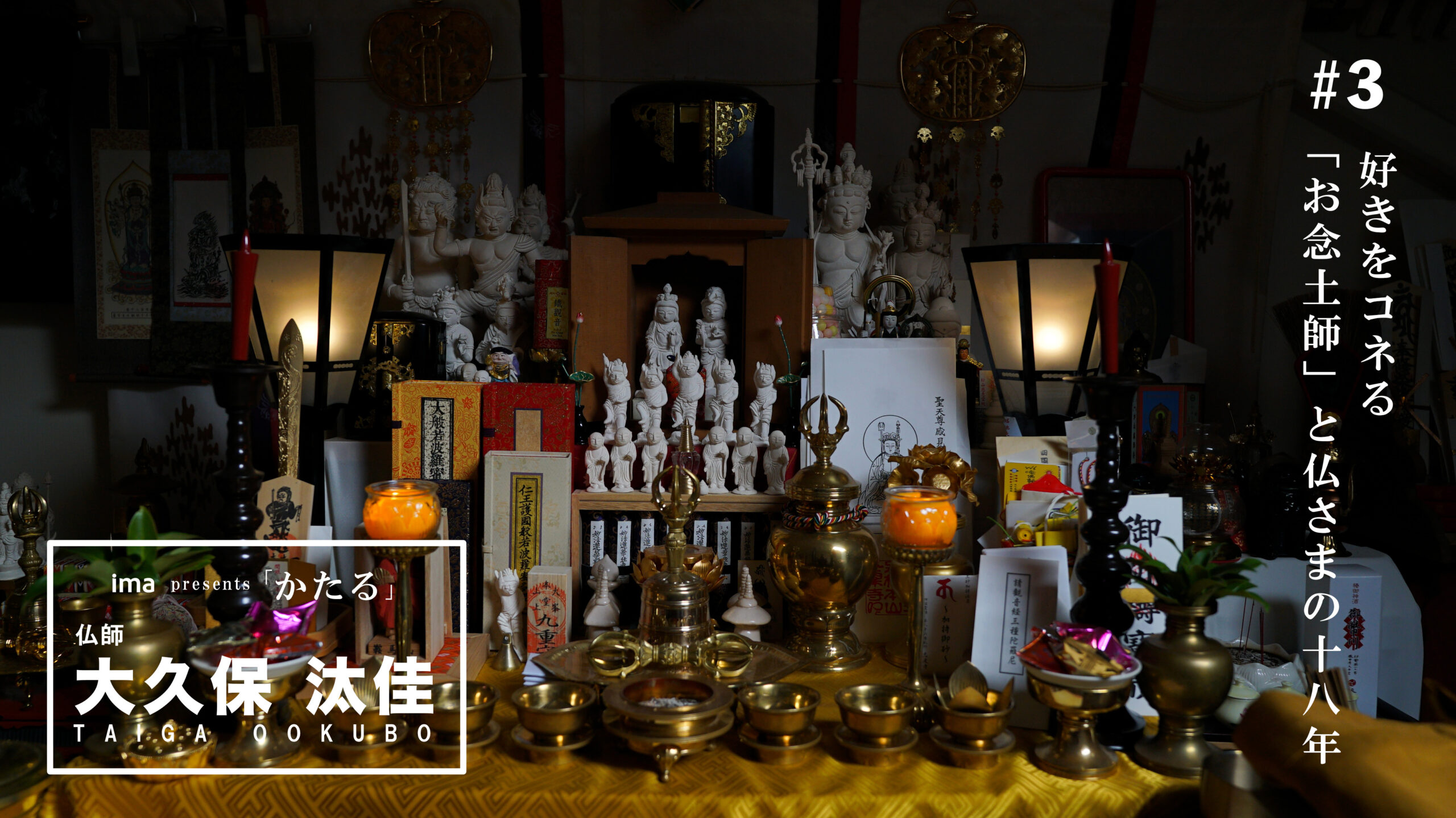
He spends his days kneading clay to create Buddha statues. And the moment he encounters a “working Buddha statue” while visiting a temple. Before he knew it, these small acts of curiosity have become guideposts in the life of Onenjishi Okubo Taka.
In the third episode of ima presents “Kataru,” Onenjishi Okubo Taka looks back on how he interacted with Buddha and the experiences he has had, from elementary school to high school. Little by little, he unravels the many encounters he has had through pursuing what he loves, and even his decision to become a Buddhist monk at the age of 18.
We hope you enjoy this series of events, in which “love” expands one’s world.

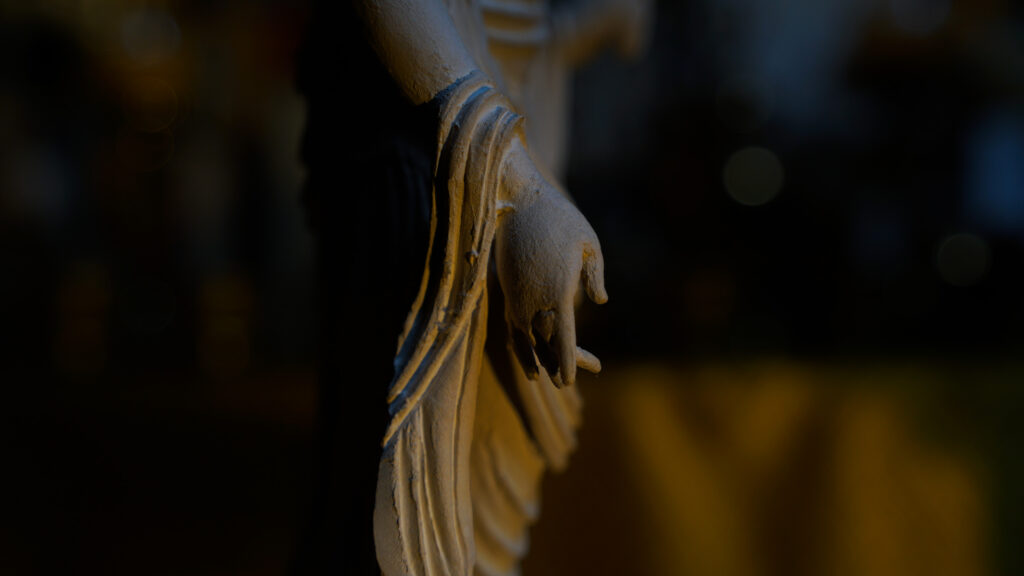
Connect and walk to pray.
My likes and interests haven’t changed at all since I was in kindergarten and elementary school. However, as I grew older, I had more opportunities to actually go see Buddhist statues. I’ve visited so many different places, it’s almost too many to count.
I particularly frequented the Tokyo National Museum (Tohaku). My aunt lived in Tokyo, so I often visited temples there. I still vividly remember going to see the “Kukai and Esoteric Buddhist Art” exhibition at Toji Temple in 2011.
On the other hand, I didn’t visit Nara or Kyoto around this time; I only visited them once, when I was in elementary school. Instead, I visited temples in Toyama, Gunma, Niigata, and other places.
In Toyama, the rock-carved Acala Buddha at Nissekiji Temple made a particularly strong impression on me. Its figure emerging in the dark hall was truly looming and powerful, and made a strong impact. Carved into the leaning bedrock, it has an incredible three-dimensional feel, and it’s a truly impressive Acala. I still go to pray there.
I also made a lot of clay Buddha statues around this time, and by the time I graduated from elementary school, I had quite a number.
I worshiped them every day and they are irreplaceable Buddhas to me.
Visit the “Working Buddha Statue”
Even when I entered junior high school, my interests and my actions toward them didn’t change much. Ah, but being able to go to places like Ueno by myself was a big change. I stayed at my aunt’s house in Tokyo, and used that as a base to go to Asakusa and Kamakura. I visited Narita-san Temple, Kawasaki, and many other places in search of blessings.
I like “working Buddha statues”—statues that are worshiped, in other words, statues that are still active. That’s why I love temples.
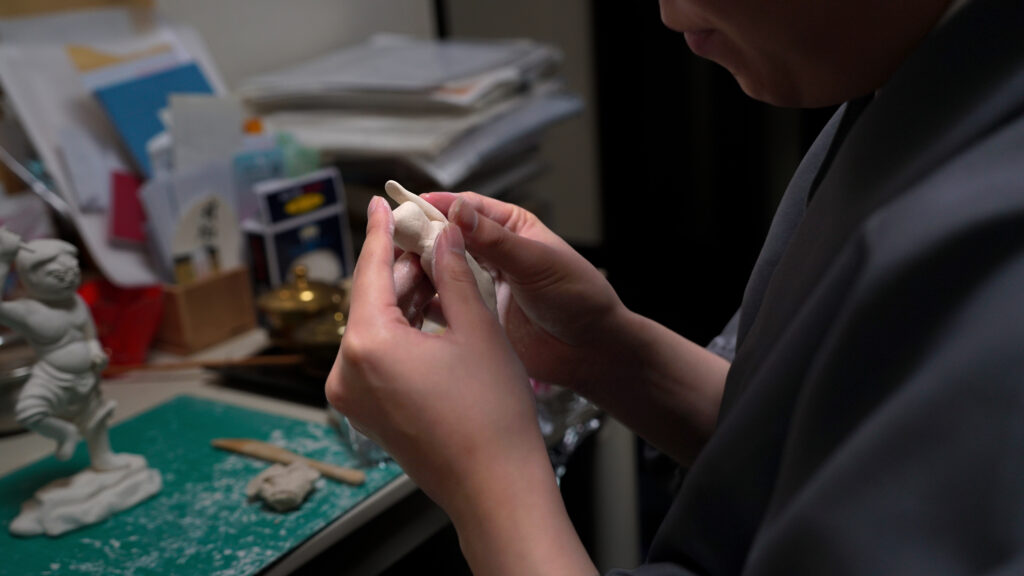
When it comes to making clay Buddha statues, I’ve been using clay since kindergarten, and that hasn’t changed at all. I’ve always used Petit Formo clay.
I continued working with clay throughout kindergarten and elementary school, so I think my ability to express details like facial expressions has become much more refined. But what I’m doing hasn’t changed at all. As I’ve gotten older, the range of expression I can create has gradually expanded. That’s still the same today.
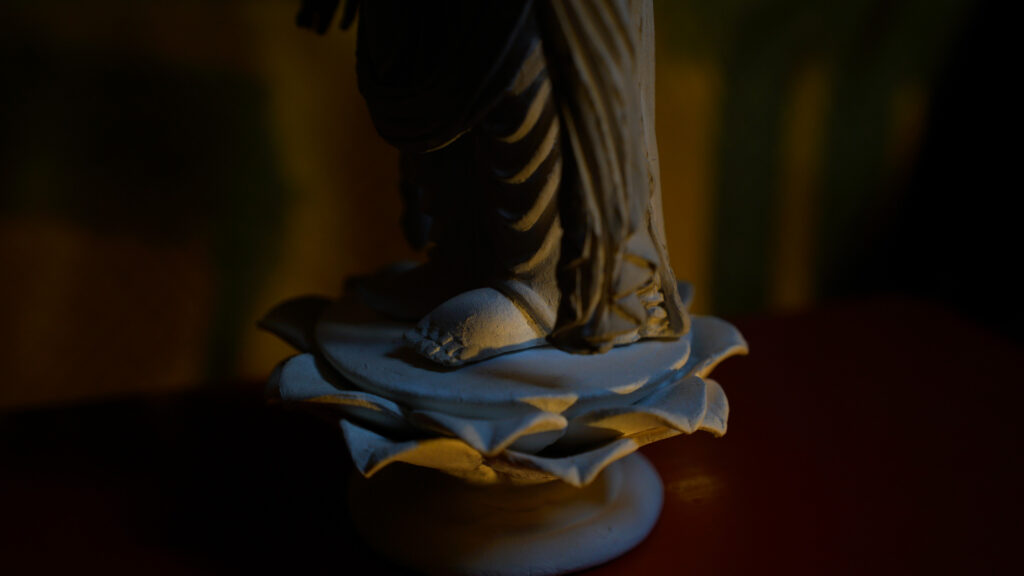
The world of Buddhist statues unfolds at an oyaki shop
Around this time, I also had the opportunity to hold a lot of solo exhibitions of Buddhist statues. I held them in a variety of places, including my local temple, Hasedera, the lodgings at Zenkoji Temple, an oyaki shop, and a coffee shop.
Perhaps because I continued these activities, a local TV station sometimes came to interview me.
I was very grateful for that.
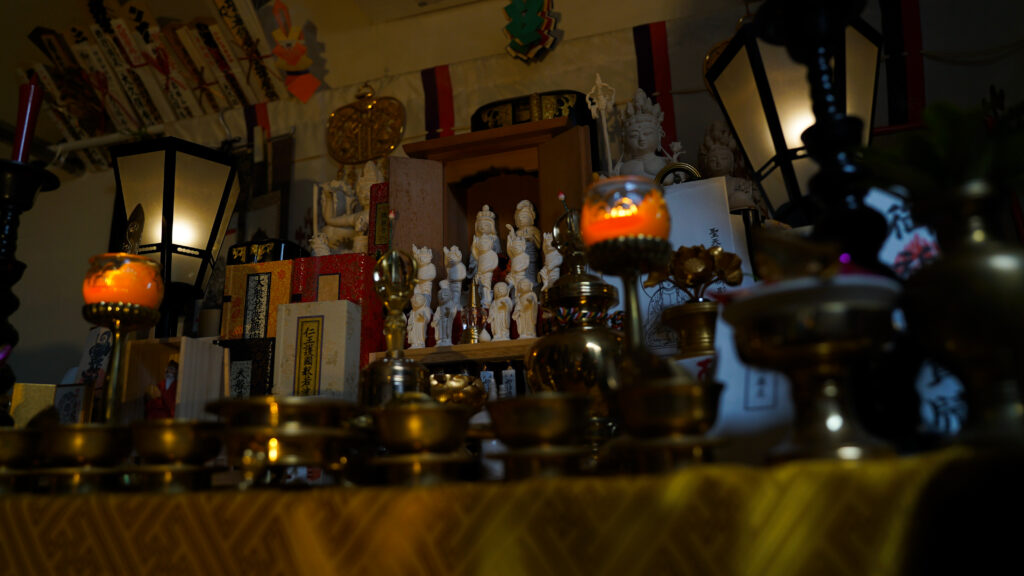
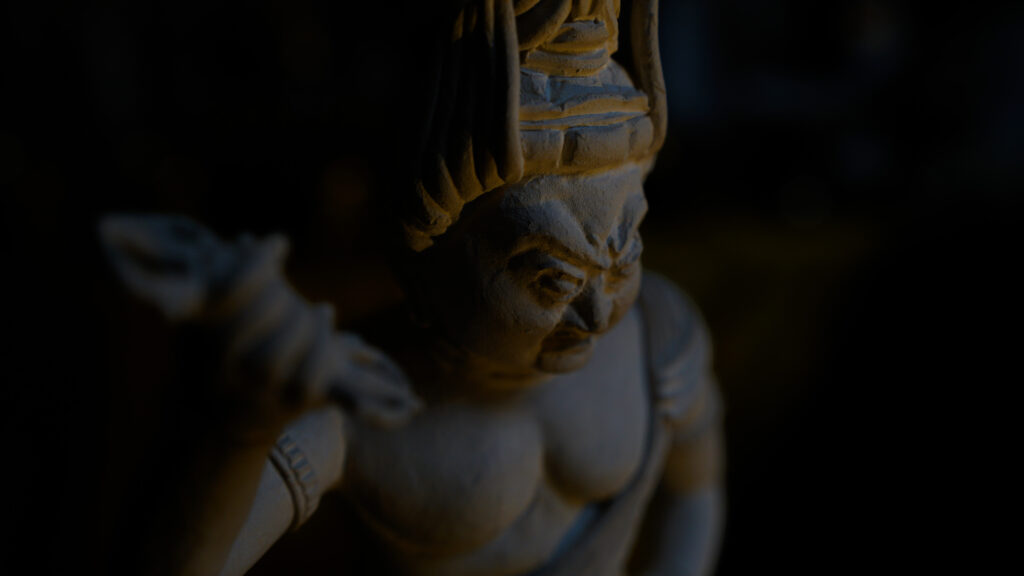
He became a Buddhist monk at the age of 18.
The biggest event that happened to me when I was in high school was becoming a Buddhist monk. I was 18 years old. I had lived a life pretty much like a monk up until that point, so I think it was a very natural progression to become a Buddhist monk. I received my ordination at Mount Takao in Tokyo, where I had a deep connection. I was guided and finally entered the Buddhist priesthood in the summer of my 18th year.
I made connections at a local temple that looked after me, helping with memorial services and so on, and little by little my connections grew. There are many temples that have helped me, but the one that I feel most strongly supported in nurturing me is Hasedera Temple in Nagano.
(To become a monk is to officially become a monk or nun.)
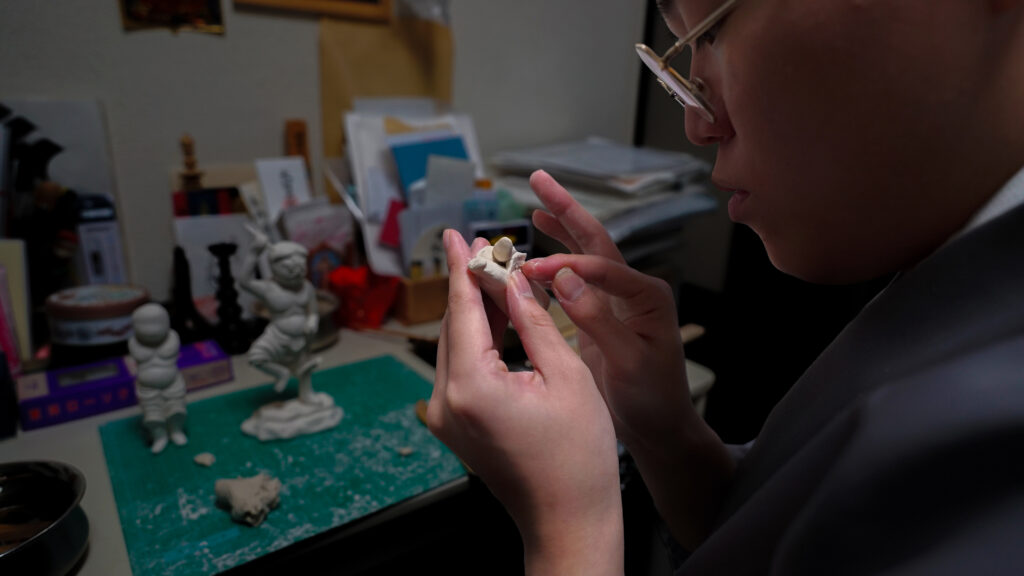
Actions bring about various connections
During this time, I had the opportunity to appear in a variety of media.
I had been posting on social media like Twitter (now X) for a long time before that. I simply loved it. As I continued doing so, I started receiving messages on social media, and from there I started receiving requests to appear in various media.
Some of the programs I have appeared on include “Hakase-chan” with Sandwichman and Mana Ashida, “Matsuko’s Unknown World” with Matsuko Deluxe, and “Kotoge Eiji’s What Beauty!” with Eiji Kotoge of Viking.
I also received a lot of interviews from TV stations in my hometown of Nagano Prefecture. In a slightly unusual twist, I was featured in Sports Nippon (Sponichi).
As a high school student Buddhist sculptor, I sometimes went to Tokyo for recordings. However, I was just working as a Buddhist monk, and it felt like I was just asked to appear, so I wasn’t really thinking about working hard at media activities.
Throughout this period, I continued to hold solo exhibitions of Buddhist statues. I even had the opportunity to hold the “Mihotoke Exhibition” at the Tanaka Honke Museum in Suzaka City, Nagano Prefecture. Looking back, I think this was the period when I had the most opportunities to be seen by the public. I honestly found these experiences interesting.
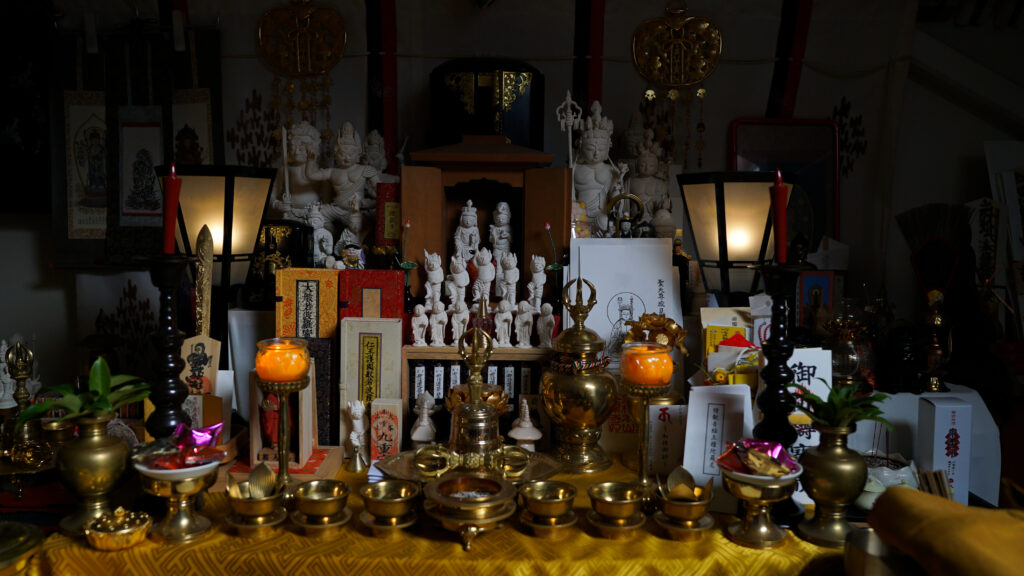
A word from the author
Thank you for watching Episode 3, “18 Years of an Onen Doshi (a Buddhist monk) who connects his passions with Buddha.”
Kneading clay to create Buddha statues, touring temples, appearing in the media, and even becoming a monk at the age of 18 – it all started with curiosity and passion. Onen Doshi Okubo Taka’s passion attracts people, increases his connections, strengthens his ties, paves the way for him to get to where he is today. I felt like this is how a person should be, and it’s really interesting to be reminded of these things as I write these articles.
Next time, we’ll be at the final episode, Episode 4. We’ll be digging into the current Onen Doshi Okubo Taka, Taiga.
Stay tuned.