

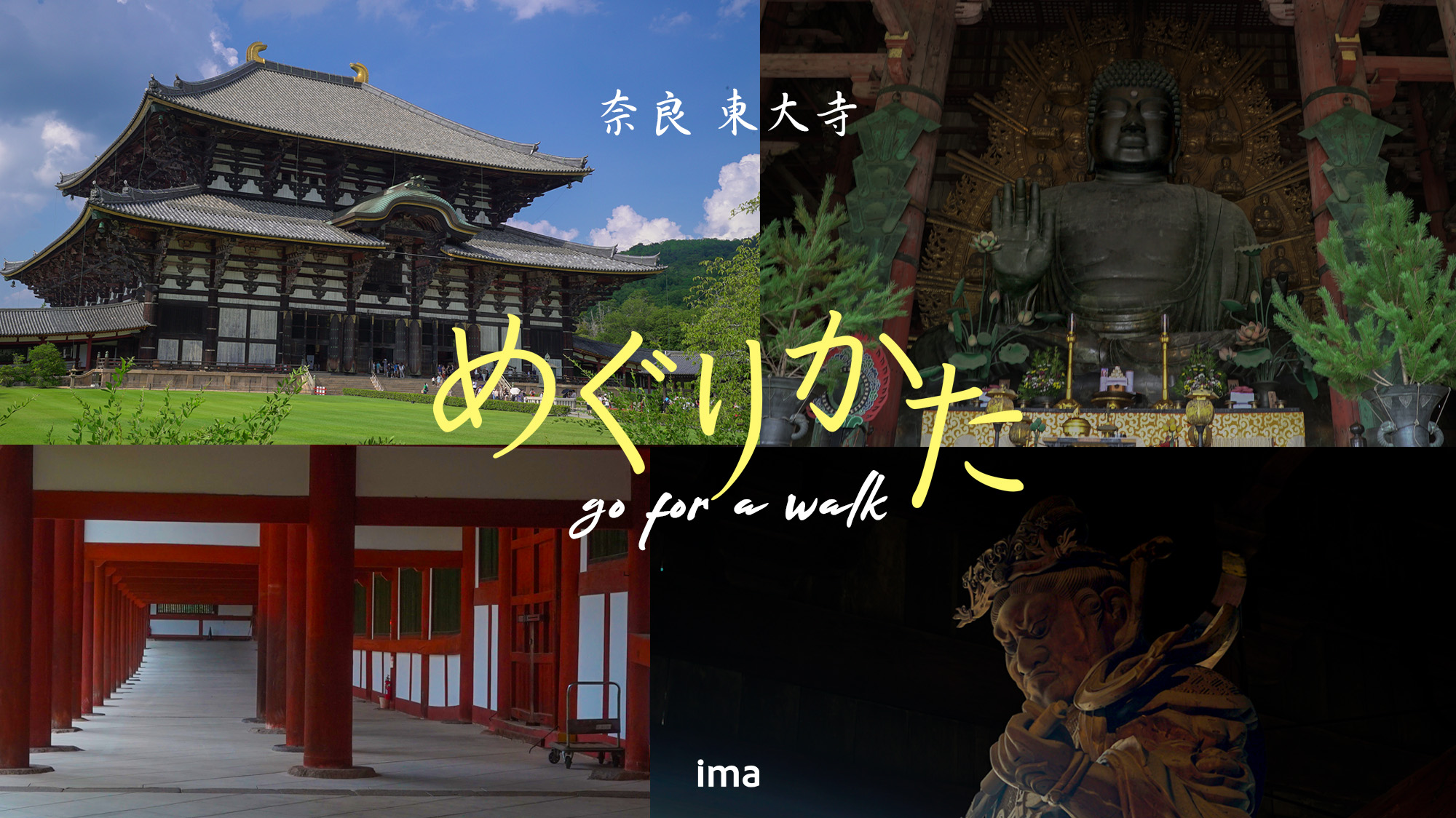
This time, we’ll introduce a tour of Todaiji Temple that takes about 2-3 hours. Todaiji Temple is a fascinating place that combines historical value, cultural experiences, and harmony with nature. By visiting, breathing in the air, and seeing with your own eyes, you can experience Japan’s deep history and culture.
[Order of visiting] ①Nandaimon ➡︎ ②Daibutsuden ➡︎ ③Nigatsudou ➡︎ ④Hoggedou ➡︎ ⑤Todaiji Temple Museum
- POINT1「Goshuin」
- POINT2「Interacting with deer」
- POINT3「Learn a little about the history of Todaiji Temple」
- POINT4「Mount Wakakusa」
①Nandaimon

The Great South Gate of Todaiji Temple is an important symbol embodying the culture and history of Nara. Its magnificent structure and the impressive Kongorikishi statues, created by Unkei and Kaikei, give visitors a sense of deep history and sacredness. In 1998, it was registered as a UNESCO World Heritage Site as part of the “Cultural Monuments of Ancient Nara.”
⬇︎
②Daibutsuden


The Great Buddha Hall of Todaiji Temple is “a place where you can feel the overwhelming presence and weight of history.” Founded in the Nara period, the current building was rebuilt in the Edo period and is one of the largest wooden structures in the world. Enshrined within the hall is a Vairocana Buddha statue, approximately 15 meters tall and weighing 250 tons, whose overwhelming presence deeply moves visitors. The Great Buddha Hall also has a rich historical background, having been burned down and rebuilt many times. It is filled with the faith and efforts of many people, and you can feel the weight of this history.

⬇︎
③Nigatsudou
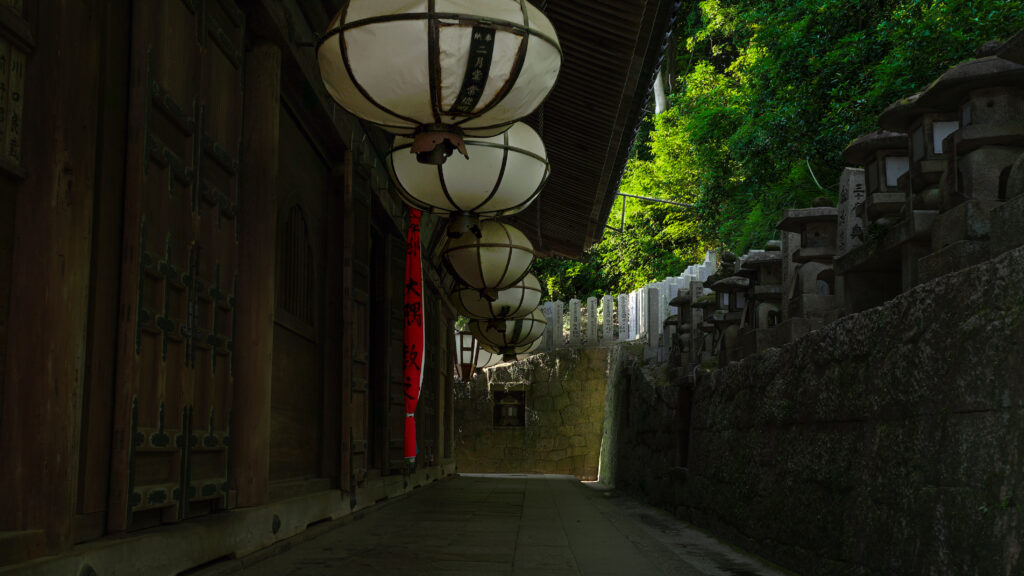
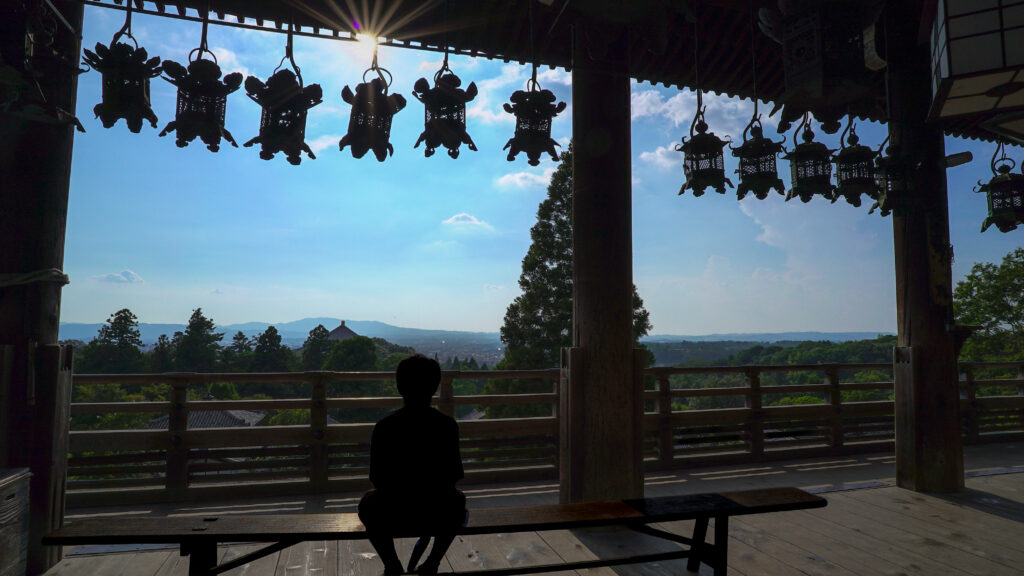

Nigatsudo Hall is “a place where history and faith come to life.” Founded during the Nara period, Nigatsudo Hall is famous for its unique architectural style, built on a slope using the same hanging structure as Kyoto’s Kiyomizu-dera Temple. The views from here are spectacular, with a panoramic view of the city of Nara and the Great Buddha Hall. The hall is also surrounded by abundant nature, creating a tranquil atmosphere, making it a popular place for relaxation.
The temple is known for the Shunie (Omizutori) ceremony, which takes place every March. This important event, with a history of approximately 1,300 years, is a ceremony to repent for past mistakes and pray for the peace of the country and the prosperity of its people.
As such, Nigatsudo Hall is a place that combines a historical background, beautiful scenery, and importance as a place of faith.
⬇︎
④Hoggedou

Hokkedo (Sangatsudo) is a sacred space filled with masterpieces of Tenpyo sculpture.
The Hokkedo (Sangatsudo) is an important Buddhist temple built during the Nara period and designated a National Treasure. The Buddhist statues, including the principal image, the standing statue of Acalanatha Bodhisattva, captivate visitors with their beauty and power.
All of the statues in Hokkedo, including the Vajrapani statue and the Four Heavenly Kings, are works from the Tenpyo period, and their expressions and poses convey deep faith and artistry.
In addition, Hokkedo hosts a special day every year on December 16th, when the secret Vajrapani statue is unveiled, making it a highly recommended visit.
⬇︎
⑤Todaiji Temple Museum

The Todaiji Museum is a “treasure trove of history and art.” It displays valuable cultural assets and historical documents from Todaiji Temple’s collection, particularly Buddhist statues, crafts, and ancient documents. The permanent exhibits allow visitors to view national treasures and important cultural properties, such as the Thousand-Armed Kannon Bodhisattva, the Nikko and Gekko Bodhisattva, and the Newborn Shakyamuni Buddha, up close, and learn about the history of Todaiji Temple through videos.

【POINT1】
To double the fun of visiting each hall of Todaiji Temple, collect “Goshuin” stamps! You can get Goshuin stamps at the Great Buddha Hall, Nigatsudo Hall, March Hall, April Hall, Kaidan-in Hall, and Shunjodo Hall. Enjoying the beautiful calligraphy on the Goshuin stamps is also one of the attractions.
【POINT2】
There are many deer living in Nara Park, and you can buy deer crackers to feed them. This is another fun part of visiting.
【POINT3】
Todaiji Temple was built by order of Emperor Shomu in 743 during the Nara period, and is an important Buddhist temple in Japan where the Great Buddha was erected to pray for national stability and peace. Its magnificent architecture and deep history make it an important symbol of Japanese culture and Buddhism.
【POINT4】
Mount Wakakusa is within walking distance of Todaiji Temple and offers panoramic views. The annual mountain burning festival is particularly spectacular.
Access and visiting hours of Todaiji Temple
- Name: Todaiji Temple
- Address: 406-1 Zoshicho, Nara City, Nara Prefecture 630-8587
- Access: Approximately 20 minutes on foot from Kintetsu Nara Station / Approximately 30 minutes on foot from JR Nara Station
- Great Buddha Hall Hours: April–October 7:30–17:30 / November–March 8:00–17:00
- Hokkedo and Kaidando Hours: Year-round 8:30–16:00
- Todaiji Museum Hours: April–October 9:30–17:30 (last entry 17:00) / November–March 9:30–17:00 (last entry 16:30)
- Phone: 0742-22-5511
- Admission Fee: Adults (middle school students and above): ¥800 / Elementary school students: ¥400
- official site URL:https://www.todaiji.or.jp/