

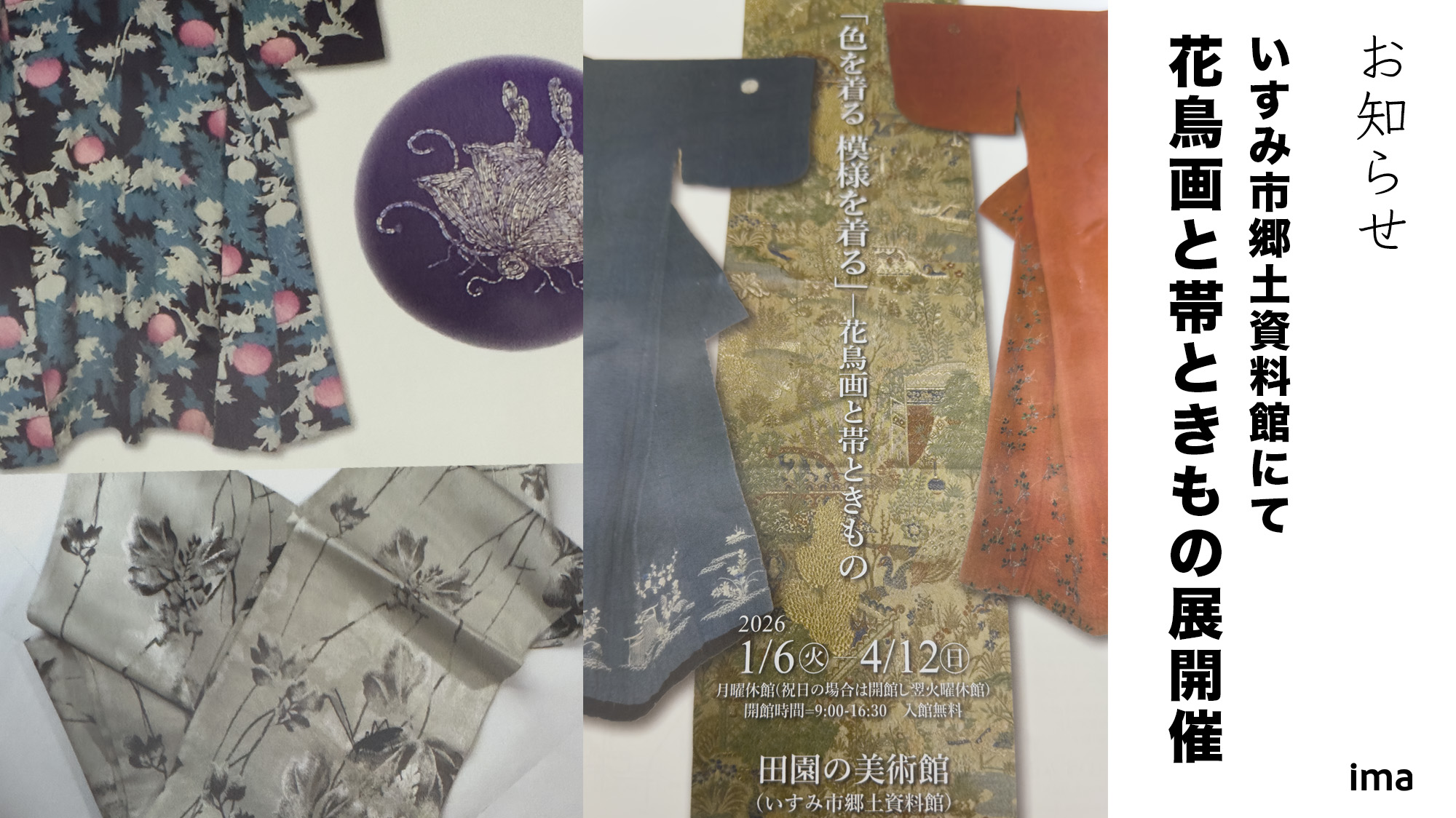
When you pick up and look at a kimono that has stood the test of time, you are sometimes struck by the way the colors and patterns come to life only when you unfold the flat folded fabric and arrange it. Compared to Western clothing, which is tailored to a three-dimensional shape, Japanese clothing is made up of pieces cut in straight lines, so the colors and patterns make a stronger impression than the shape itself.
The understated, classic colors and patterns of the late Edo to Meiji periods, elegant embroidery patterns, and slightly unusual modern designs from the Taisho to early Showa periods are just some of the things that are remarkable. The meticulous attention to detail paid to fabrics, colors, and patterns in pursuit of something ever more beautiful and new, while taking into account the trends of each era and the materials and techniques available, is truly remarkable.
In this exhibition, you can see a glimpse of the wide range of designs that have been created with flowers, birds, insects, and fish as their main motifs, along with old hanging scrolls and folding screens of flower and bird paintings.
“Wearing Colors, Wearing Patterns”
Reference exhibits: Flower and Bird Paintings, Obi, and Kimono
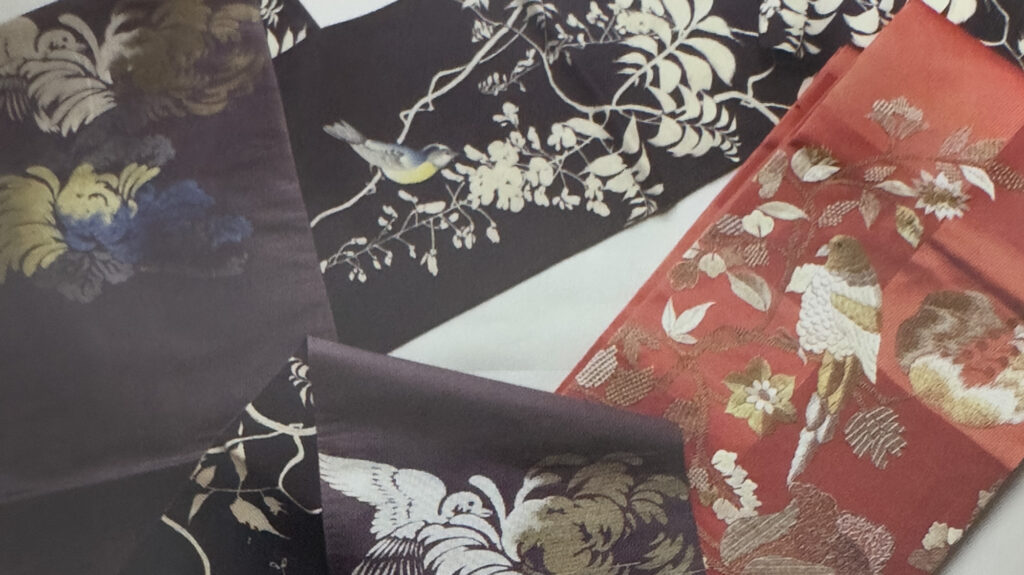
A light and airy kosode (short sleeve kimono) made of safflower-dyed crepe (late Edo period)
A round obi with an ancient Persian-style paradise pattern (Taisho period)
A formal indigo-dyed cotton kosode (short sleeve kimono) worn by commoners (late Edo period)
A single-layer kimono with a thistle pattern (Taisho period)
An embroidered butterfly pattern on purple crepe (late Edo period)
A dynamic embroidered omeshi (short sleeve kimono) with a grape pattern (early Showa period)
A gauze round obi with a sketch-like kudzu and bell cricket pattern (Taisho period)
A belly-attached obi and a fukuro obi with a flower and bird pattern (Taisho period to early Showa period) *Images above
Information
Admission: Free
Venue: Isumi City Local History Museum (Rural Museum)
Address: 93-1 Yamasa, Isumi City, Chiba Prefecture, 298-0124
TEL:0470-86-3708
WEB:http://www.city.isumi.lg.jp
Access: Train, Bus, Car
・Train and Bus ① From JR Mobara Station to Yasei Seinenkan (very infrequent)
Take the shuttle bus bound for Isumi (departing at 8:25 AM or 1:05 PM) from Bus Stop 1 at the South Exit of JR Sotobo Line Mobara Station. It takes approximately 30 minutes. Get off at Yasei Seinenkan and walk approximately 2 minutes.
・Train and Bus ② From JR Ohara Station to Kuniyoshi Station
As of December 2025, due to the derailment accident, Isumi Railway has suspended train service to Kuniyoshi Station, the nearest station to the Isumi City Local History Museum. Therefore, please use the replacement bus service from JR Ohara Station. For the replacement bus stop and timetable, please see the following page.
▶︎ https://isumirail.co.jp/blog/archives/10212
Get off the bus at Kuniyoshi Station and walk for about 10 minutes
By Car: Approximately 20 minutes from Mobara via the Nanso Wide Area Agricultural Road. Approximately 15 minutes from Ohara via National Route 465. Approximately 10 minutes from Otaki (Funako) via National Route 297 via National Route 465. We recommend traveling by car or rental car.
